Types of Genres
Genre Name
|
Genre Description
|
Genre Example
|
Adventure
|
These games allow the player to take the role of a
protagonist in an interactive storyline, typically driven by exploration and
puzzle-solving. This genre focuses on the storyline allowing it to draw
heavily from other narrative-based media, including literature and film.
Almost all Adventure-type games are designed to be single player, emphasising
on storyline and its characters. Notable games include:
• Fahrenheit
• Heavy Rain
• L.A Noire
• Escape
From Monkey Island
|
Fahrenheit

Predecessor to Heavy Rain, Fahrenheit is an engrossing
videogame with breathtaking storytelling and characters designed for adult
players with high-replayability as a result of multiple endings. While the
graphics aren’t best in the world they are also not the worst. Quantic Dream
have accomplished what they set out to by producing a game that integrates
narrative and gameplay so tightly that it seems almost inseparable.
Fahrenheit is undoubtedly one of the finest games of it’s generation.
|
Action-Adventure
|
A hybrid genre and perhaps the broadest genre out of
all Videogames. For example, Adventure games have situational problems for
the player to solve with little or no action. Any action is normally confined
to isolated minigames. In terms of Action games, the gameplay is based on real-time
interaction that challenges the player’s reflexes. Thus, Action-Adventure
games engage the player in both reflexes and puzzle-solving, in both violent
and non-violent situations. Notable games include:
• Legend of
Zelda
• Grand
Theft Auto
• Hitman
• Tomb
Raider
|
Prototype 2

Prototype 2 extends the experience of becoming the ultimate shapeshifting weapon. A viral outbreak has killed Sgt. James Heller's family and transformed him into a EVOLVED. Powered by revolutionary shapeshifting powerr, you must hunt, kill and consume your way across New York to take revenge on the man responsible: Alex Mercer. Prototype 2 might not be perfect and there are a few things which need to do a better job next game, like the lack of variation in missions but is nonetheless one of the most visceral, spectacular and brutal sandboxes out there.
|
Survival
Horror
|
First dubbed in Japan with the release of Resident Evil
(1996), Survival Horror is a subgenre of Videogames inspired by Horror
Fiction in which it focuses on the survival of the protagonist and attempts
to scare the player(s). Although combat can be used as part of gameplay,
these games are typically designed with limited health and ammunition in
order to create a feeling of helplessness in the player. They are also
challenged to find items that unlock the path to new areas, solve puzzles at
certain locations and react to unexpected enemy attacks. Notable games
include:
• Resident
Evil
• Silent
Hill
• Fatal
Frame
• Forbidden
Siren
|
Silent Hill 2
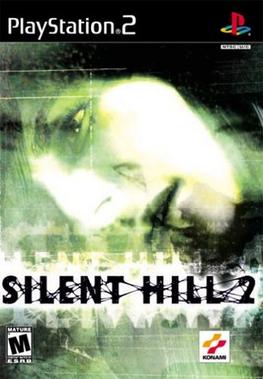
Players assume the role of James Sunderland, who
receives a cryptic letter from his deceased wife beckoning him to meet her in
Silent Hill-- A location of special importance to the couple. The mystery of
the letter compels James to return but he is quickly thrown into the surreal
horrors and all-too-real dangers of Silent Hill. Rarely has sound, vision and
control worked in perfect synchronization with one another and it’s gripping
characters/storyline leaves players wanting to play again and again. Silent
Hill 2 stands strong as a Survival Horror game and is considered one of the
best Survival Horror games ever released.
|
First-Person
Shooter
|
These type of games focus on “behind-the-scenes” of the
protagonist in a first-person perspective using firearms and projectile
weapon-based combat. An FPS is typically fast-paced and require actions be to
be performed reflexively by the player. These type of games share common
traits with other Shooter-types, which fall under the category of Action
games.
• Call of
Duty
• Modern
Warfare
• Half-Life
• House of
the Dead
|
Far Cry 3
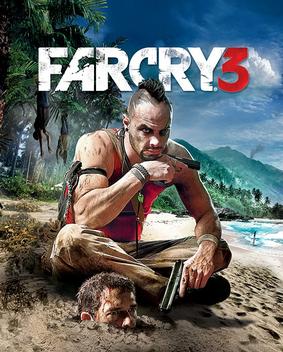
After being stranded on a tropical island, Jason Brody
is introduced to a savage paradise where lawlessness and violence are the
only sure thing. Here, plays dictate how the storyline in Far Cry 3 unfolds,
from the battles they chose to fight to the allies or enemies they make along
the way. Far Cry 3 is an amazing game featuring stunning visuals and
gameplay, while Ubisofts’ use of FPS action and Openworld gameplay really
hits the mark.
|
Roleplaying
|
Originally starting out as “Pen and Paper”-based games
like Dungeon and Dragons. Here the player assumes the roles of the
protagonist in a fictional setting where they have the responsibility to act
out these roles within a narrative. In an electronic format, an RPG typically
allows players to control a character of team of characters who undertake
quests and sidequests following a long storyline. Most can include
capabilities that advance gameplay using statistical mechanics. While these
often share rules and settings with their tabletop RPG-counterparts, they
typically emphasize on character advancement more than collaborative
storytelling.
• Pokémon
• Final
Fantasy
• Elder
Scrolls: Skyrim
• Fallout
|
Fallout 3

Set in the aftermath of a world-wide nuclear war,
Fallout will challenge you to survive in an unknown and dangerous world. You
will take the role of a Vault-dweller, a person who has grown up in a
secluded, underground survival Vault. This game has too many strong qualities
to adequately list them all. Atmospheric, darkly humorous, with memorable
characters, meaty RPG elements, and possibly the best and most satisfying
videogame ending of all time. Sixteen years on, the original Fallout remains
the best entry in the franchise. Perhaps the strongest aspect of Fallout is
that it is ideal for RPG newbies yet at the same time provides a depth of
role-playing that veterans can really get stuck into. It also has the best
replay value of any game I've experienced to date.
|
Real-Time
Strategy
|
A subgenre of Strategy-based games RTSs are typically
defined revolving around a number of goals, including resource collection,
base and unit construction and engagement in combat with either other player
or AIs. Emphasis is often put on managing logistics, resources and
production. Objectives provided can be very demanding and complex, requiring
the player to think smart and logically.
• Age of Empires
• Age of Mythology
• Star Wars: Galactic Battlegrounds
• Dune
|
Star Wars: Galactic Battlegrounds
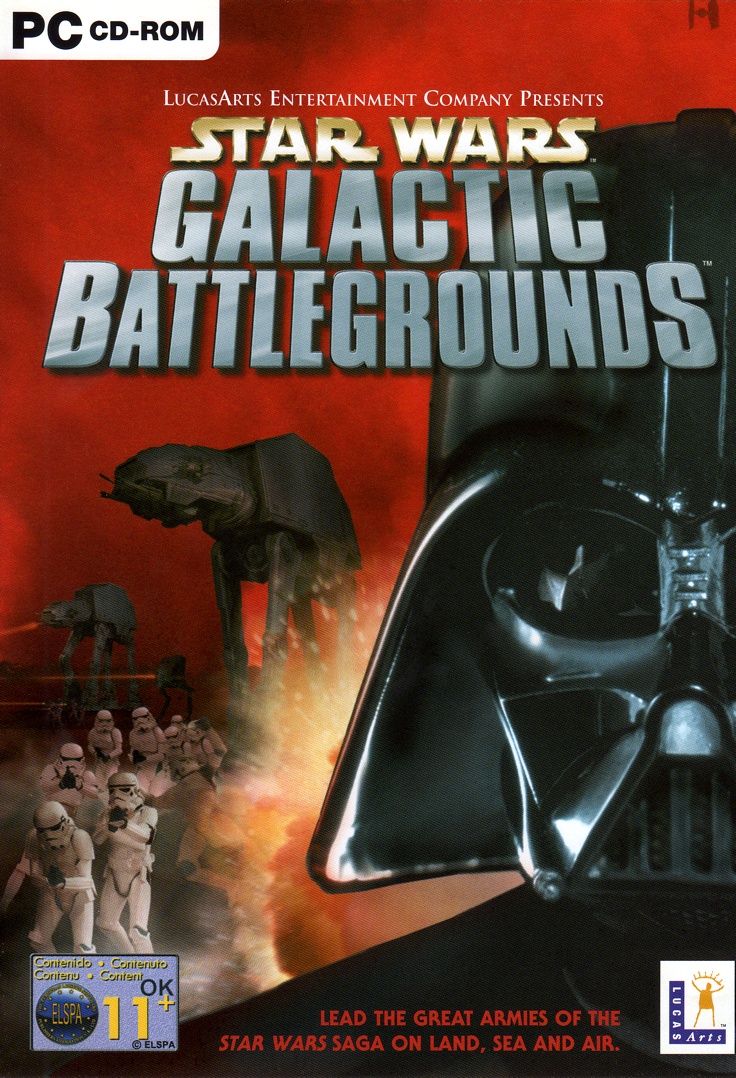
Star Wars: Galactic Battlegrounds is a real-time
strategy computer game set in the Star Wars universe that uses the same
gameplay mechanics and Genie engine in Age of Empires and Age Mythology. In
this RTS the Player takes command of the Galactic Empire or Rebel Alliance,
and other Civilizations in intense, real-time campaigns that will determine
the final outcome of the galaxy. Galactic Battlegrounds is a fun and solid
game despite it’s dated graphics, offers exactly what the dedicated Star Wars
follower wants: To re-enact the drama and excitement of the Star Wars’
universe. Completely worthy of the Star Wars legacy.
|
Fighting
|
In fighting games the goal is simple in that players
typically fights other players or AI in some form of one-on-one combat.
Characters in these games tend to be of equal power and fight matches
consisting of multiple rounds, which take place in an arena. In fighting
games the player can execute a number of different moves such as blocking,
counter-attacking and chaining attacks known as “combos”.
·
Tekken
·
Soul
Calibre
·
Street
Fighter
·
Virtual
Fighter
|
Super Smash Bros. Series

SSB is a series based on the Fighting genre but is
considered far less on the traditional sense when compared with other
Fighting games. Instead of the traditional health bar, Players are given
“Damage Meters” which increase throughout the battle. The higher it rises,
the further the Player gets damaged and susceptible to being knocked out the
stage. Sending other Players off stage is the key to scoring in this game
whether it is down, up or on either side of the stages. SSB makes use of a
variety of iconic Nintendo characters, like Mario, Link and Pikachu. Each
game has a different feel and aesthetics, with varying preferences and tastes
amongst it’s fans. Many consider the second iteration Melee for the Game Cube
to be the most tightly polished and advanced having high speed and combo
potential which gave rise to tournaments and competitive layers still to this
day.
|
Platform
|
This genre often requires the protagonist to run and
jump between surfaces (i.e. platforms) to reach the end, whilst avoiding
objects and enemy-characters in a limited time-slot. Platform games originate
from the Side-scrolling genre in the early 1980s.
• Super Mario Bros.
• Sonic the Hedgehog
• Meatboy
|
Bloody Trapland
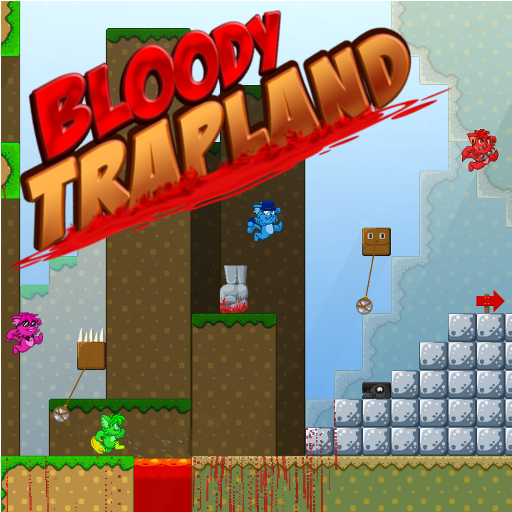
Bloody Trapland is a colourful, high-paced and
trial-and-error platformer game filled with dozens of dangerous traps and
leap of faith-style jumps. The gameplay is different and unique, in that
there are no enemies or bosses to defeat, or keys to collect to go forwards.
It’s objective is simple; Get to the end without dying! Though challenging,
Bloody Trapland is a very frustrating game if you are playing by yourself but
it is a great, fun game if you have at least one person to play with you. As
a result anyone can enjoy, where they are a casual player or even a hardcore
gamer.
|
Stealth
|
This is a type of genre in which the player must focus
on stealth and subterfuge in order to avoid and overcome the enemy. Games in
this genre forces players to remain undetected by hiding, using disguises,
and/or avoiding making noise. In some games the player are also allowed to
choose between a stealthy approach or directly attacking the enemy head on, perhaps
rewarding them for greater levels of stealth. This genre normally employs
espionage, counter-terrorism and rogue themes, with the protagonist being
identified as special forces operatives, spies, thieves, assassins and
ninjas. Some games have combined stealth game elements with those of other
genres, such as first-person shooters and even platform games.
• Assassin’s Creed
• Dishonoured
• Thief
• Metal Gear Solid
|
Dishonored
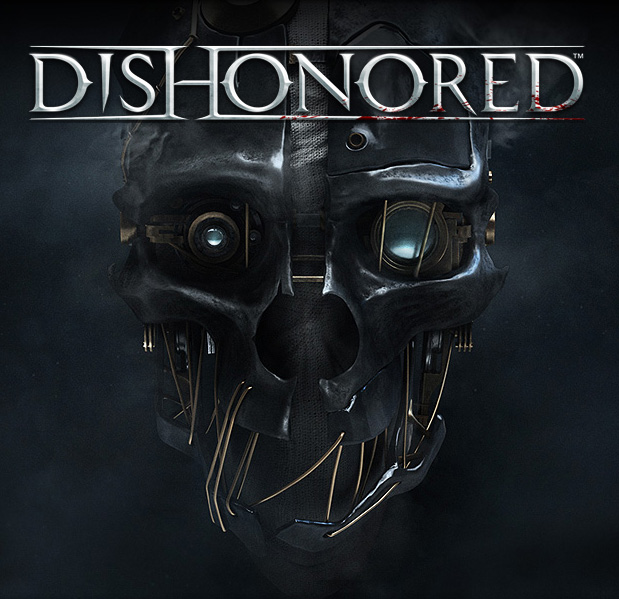
This
game was a breath of fresh air back in October 2012, its time of release. It
made stealth different and more engaging, ironically more realistic in its
fantastical, dystopian world. Whereas games like Splinter Cell use shadows to
hide from enemies, Dishonored uses the simplest mechanic; line of sight. It
is all the better for it, as the game is a blend of stealth and action, while
favouring the former over the latter. As for the gameplay, it is relatively
simple but engaging. From a first person perspective, you are given a limited
assortment of weaponry, ranging from a sword to a crossbow by way of a
pistol. What makes everything better though is the roster of so called
supernatural abilities. The game also has multiple endings for what is
overall a riveting storyline about betrayal, revenge and redemption. The
endings all hinge on whether you slaughter everyone or sneak past, leaving
them all untouched and unaware. It directly affects the so called Chaos
system and missions can and often will play out differently depending on your
actions during the course of the adventure.
|
Point-&-Click
|
This is a subgenre of Adventure games but distinct
themselves from Text-Adventure games. Gameplay here is revolutionized by
making use of visual perception and a point-and-click interface, e.g. where
the player interacts with the game environment and objects using an on-screen
cursor. In many of these games, the mouse pointer is context sensitive in
that it applies different actions to different objects.
• Clock Tower
• Five Nights at Freddys
• Grim Fandango
• Phantasmagoria
|

In this game the
player takes the role of Mike Schmidt-- A night-shift security guard working
at a restaurant called Freddy Fazbear's Pizza. Here, the player must survive
the night-shift (Midnight to 6:00 AM) and avoid getting caught by the
animatronics (Freddy Fazbear, Bonnie the Rabbit, Chica the Chicken and Foxy
the Pirate Fox) who roam the facility. The player can do so by keeping an eye
on the animatronics via a network of security cameras but also have a limited
amount of power. FNAFs has been praised by critics and players alike for
being a unique take on the Point-and-Click Survival Horror subgenre, with a
particular emphasis on its simplistic design and gameplay that largely
contributes to its’ overall feeling of fear and paranoia.
|

No comments:
Post a Comment
Note: only a member of this blog may post a comment.